CRO and Paid Media: How Conversion Efficiency Affects CPA, ROAS, and Scaling
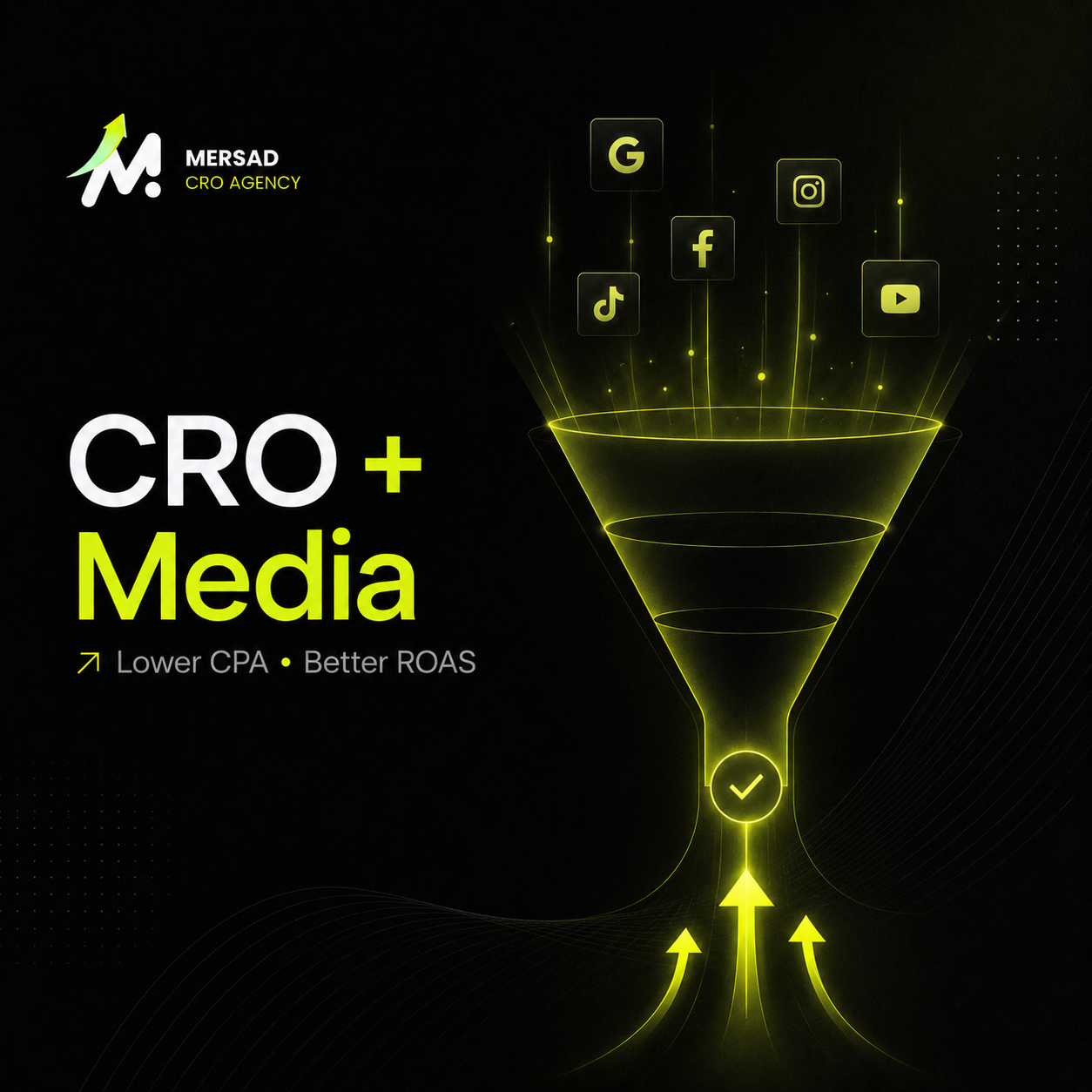
Paid media and CRO are often managed as separate functions. Media teams optimize targeting, creative, bidding, and budget. CRO teams optimize the website. Commercially, they are connected by one equation: traffic cost must be converted into profitable customer value.
Why CRO Changes Paid Media Economics
When the same traffic converts more efficiently, the business can generate more orders from the same spend, reduce effective CPA, improve Revenue per Session, and create more room for scaling.
The Core Relationship
- Clicks create opportunity.
- The landing experience shapes intent.
- The Product Page builds or weakens confidence.
- Checkout converts or loses high-intent users.
- Operations influence cancellation, return, and repeat purchase.
Why ROAS Can Improve Without Better Ads
If spend and traffic remain similar while Conversion Rate or Average Order Value improves, revenue can rise without a media change. The improvement may come from better message match, Product Page clarity, payment completion, or merchandising.
Traffic Quality Still Matters
CRO should not be used to excuse poor targeting. A weak audience, misleading creative, or low-intent campaign can produce low conversion even on a strong website.
Segment Paid Traffic
- Campaign
- Ad set or audience
- Creative
- Landing Page
- Device
- New vs returning
- Geography
- Product category
- Offer
- Placement
Message Match
The landing page should continue the promise made by the advertisement. A mismatch between creative, offer, product, price, or audience expectation increases drop-off.
CRO Metrics for Paid Media Teams
- Landing engagement
- Product View Rate
- Add to Cart Rate
- Checkout Start Rate
- Purchase Rate
- Revenue per Session
- AOV
- CPA
- ROAS
- Refund-adjusted ROAS
- New Customer Conversion
Scaling Exposes Website Weakness
As campaigns expand, they often reach colder users who know less about the brand and require more information, trust, and proof. A site that converts returning customers may struggle with new audiences.
A Joint CRO and Media Workflow
- Align campaign and landing-page objectives.
- Define the customer segment.
- Validate tracking.
- Analyze post-click behavior.
- Identify where intent is lost.
- Improve the experience.
- Measure CPA and revenue impact.
- Document segment learnings.
Common Cross-Team Mistakes
- Blaming ads without funnel analysis.
- Blaming the website without checking audience quality.
- Optimizing CTR instead of qualified revenue.
- Using one landing page for different intents.
- Ignoring mobile post-click behavior.
- Reporting ROAS without refunds or margin.
CRO Opportunities That Support Paid Scaling
- Audience-specific landing pages
- Stronger offer clarity
- Faster mobile experience
- Improved Product Pages
- Payment-method visibility
- Delivery clarity
- Checkout error reduction
- Post-purchase retention
Revenue per Click as a Shared Metric
Media teams often optimize Cost per Click while CRO teams optimize site conversion. Revenue per Click connects acquisition quality and post-click efficiency. Gross Margin per Click is stronger when margin data is available.
Landing Pages by Intent
Different campaigns may require different landing experiences. A branded search user, a cold paid-social user, and a returning customer do not need the same amount of explanation, proof, and navigation.
Creative Learning for CRO
Ad comments, click behavior, winning messages, and audience response can reveal customer language and objections. CRO research can also improve ad messaging by identifying the questions customers need answered.
Scaling Diagnosis
- Check whether audience and placement changed.
- Compare landing engagement.
- Review Product View and Add to Cart.
- Review Checkout and payment.
- Segment new and returning users.
- Check product, price, stock, and offer changes.
- Measure CPA, Revenue per Session, and margin.
Frequently Asked Questions
Can CRO reduce CPA?
When comparable paid traffic produces more purchases, effective CPA can fall. The result depends on traffic quality, spend, and conversion improvement.
Does a higher Conversion Rate always improve ROAS?
Not always. Average Order Value, discounts, refunds, cancellations, and attribution also influence ROAS.
Who owns post-click performance?
It should be shared across media, CRO, analytics, product, and operations. Blame between teams delays diagnosis.
Paid Media Funnel Decomposition
Break paid performance into impression, click, landing engagement, Product View, Add to Cart, Checkout, purchase, and retained customer value. This shows whether the problem begins before or after the click.
Campaign Quality Versus Website Efficiency
Hold comparable variables where possible. Compare the same Device, market, landing page, product category, and customer type. If website progression declines across comparable traffic, investigate the experience. If engagement changes immediately after targeting or creative changes, investigate traffic quality and message match.
CPA Decomposition
CPA is influenced by media cost and conversion efficiency. Higher CPC can be offset by stronger post-click conversion, while cheaper clicks can still produce poor economics if intent is weak.
ROAS Quality
Reported ROAS may ignore refunds, cancellations, discount cost, and margin. Use refund-adjusted revenue and contribution margin where possible. A campaign can produce strong top-line ROAS while attracting low-quality orders.
Joint Experiment Ideas
- Audience-specific landing pages
- Creative-to-page message match
- Offer explanation
- Product selection by campaign intent
- New-customer trust content
- Mobile Checkout improvements
- Post-purchase retention by acquisition source
Conclusion
CRO and paid media should operate as one commercial system. Media acquires attention and intent. The website converts that opportunity into revenue, margin, and customer value.
Mersad helps ecommerce teams connect campaign data, GA4 funnels, customer behavior, UX, and experimentation to improve conversion efficiency and paid-media economics.