Post-Purchase Experience: How to Build Trust, Retention, and Repeat Revenue After Checkout
Many ecommerce teams treat payment as the end of the customer journey. The order is recorded, revenue appears, and the acquisition campaign gets credit.
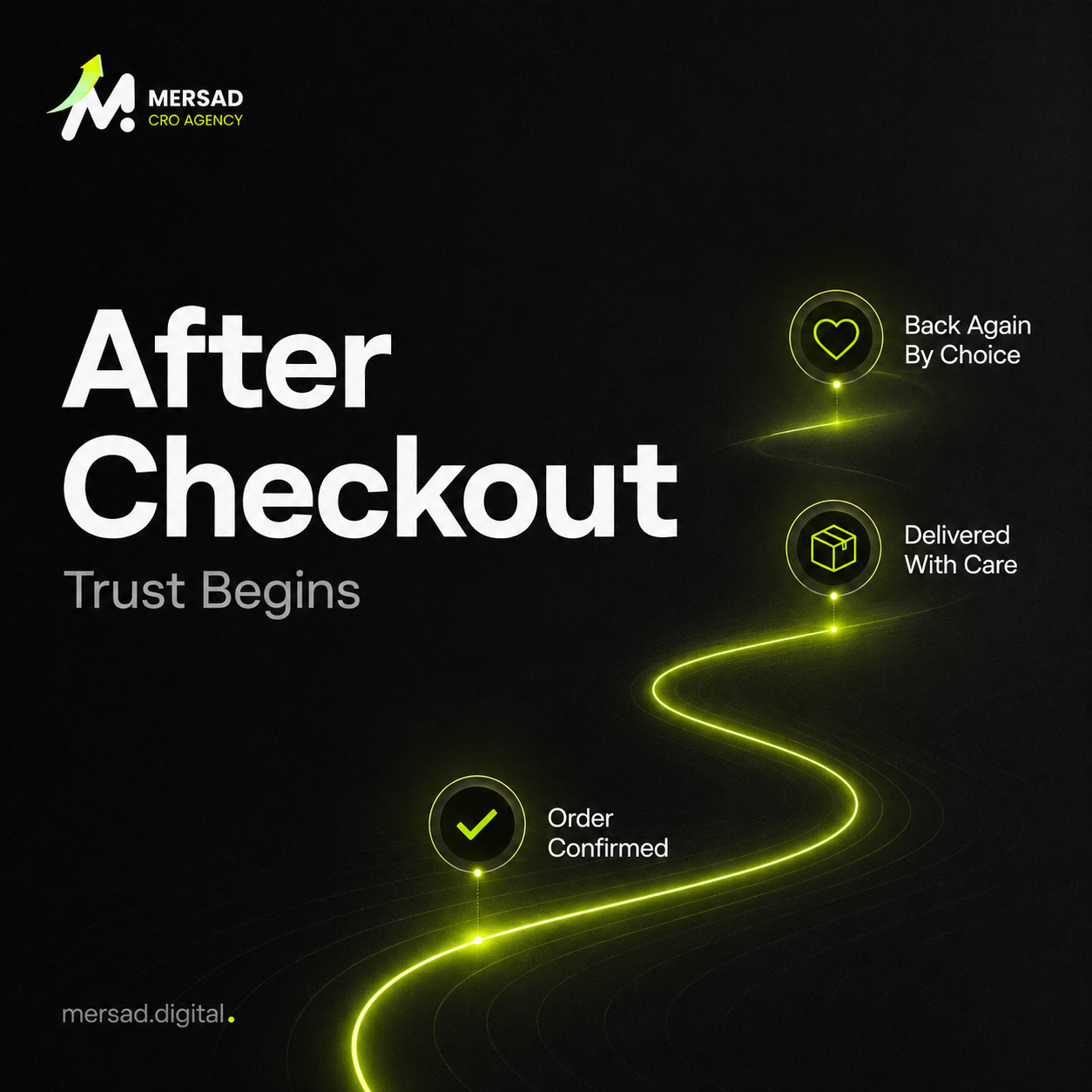
For the customer, payment is not the end. It is the beginning of the first real test of trust.
Before payment, the customer sees promises: product quality, fast delivery, easy returns, reliable support, and a smooth experience. After payment, the customer begins checking whether those promises are true.
The post-purchase experience affects whether the customer feels reassured, contacts support, cancels, returns, writes a review, recommends the brand, and buys again.
What Is the Post-Purchase Experience?
The post-purchase experience includes every interaction after a customer completes an order.
- Order confirmation
- Payment confirmation
- Preparation updates
- Shipping notifications
- Delivery tracking
- Customer support
- Product onboarding
- Usage guidance
- Review requests
- Returns or exchanges
- Replenishment reminders
- Loyalty communication
- Cross-sell and repeat purchase
This stage sits at the intersection of customer experience, operations, retention, and lifecycle marketing.
Why the Period After Payment Creates Anxiety
After payment, the customer has given the store money but has not yet received the value. That gap creates uncertainty.
Common questions include:
- Was the payment successful?
- Is the order confirmed?
- Is the address correct?
- Is the item actually in stock?
- When will it ship?
- When will it arrive?
- Can I change the order?
- What happens if something goes wrong?
The higher the order value, the longer the delivery time, and the lower the brand familiarity, the stronger this uncertainty may become.
Post-purchase communication should reduce the information gap between payment and value delivery.
Order Confirmation Should Do More Than Say “Thank You”
A weak confirmation message says only that the order has been received.
A useful confirmation helps the customer verify the transaction. It should clearly show:
- Order number
- Products
- Variants and sizes
- Quantity
- Shipping address
- Payment status
- Final total
- Delivery expectation
- Contact method
- What happens next
The customer should not need to contact support to confirm whether the correct size or address was recorded.
Expectation Management Reduces Support Demand
Customers become anxious when the store is silent.
A clear post-purchase timeline can communicate:
- Order received
- Payment confirmed
- Order under preparation
- Order shipped
- Out for delivery
- Delivered
Each update should answer four questions:
- What changed?
- What happens next?
- When should the customer expect the next step?
- What should the customer do if something is wrong?
Good communication reduces “Where is my order?” contacts, duplicate messages, cancellations, and chargeback risk.
Delivery Communication Must Match Operations
A polished email cannot compensate for unreliable fulfillment.
If the store promises two-day delivery but operations regularly take five days, the communication creates false confidence and later disappointment.
Better delivery communication distinguishes:
- Processing time
- Dispatch date
- Transit time
- Estimated arrival
- Delay status
- Geographic limitations
- Courier handoff
- Tracking availability
Avoid leaving an order marked as “processing” for several days without explanation.
Customer Support Is Part of Conversion Economics
Support after purchase affects profitability.
Poor communication creates:
- Delivery-status tickets
- Address-change requests
- Duplicate messages
- Cancellation requests
- Chargebacks
- Negative reviews
- Failed deliveries
Support cost should be included when evaluating the commercial performance of the post-purchase journey.
Useful metrics include Support Contacts per Order, delivery-related contacts, Time to First Response, Resolution Time, repeated contact rate, cancellation after support contact, and return after support contact.
Product Adoption Is the Missing Retention Step
Many stores move directly from order confirmation to a discount for the next purchase. But the customer has not yet received or used the first product.
The strongest retention opportunity is often helping the customer succeed with what they already bought.
Skincare
- How to introduce the product
- Usage frequency
- Compatibility guidance
- What results to expect
- What irritation signals require caution
Fashion
- Care instructions
- Styling ideas
- Fit adjustments
- Washing guidance
Coffee
- Brewing ratio
- Grind recommendation
- Storage guidance
- Equipment compatibility
Electronics
- Setup
- Charging
- Compatibility
- Troubleshooting
Product adoption increases the chance that the customer experiences the value that motivated the purchase.
Decision Reinforcement Without Manipulation
After purchase, customers may reconsider the decision. A useful message reinforces the decision through clear benefits, usage guidance, product care, realistic expectations, community examples, and easy access to support.
The goal is not to pressure the customer into feeling positive. The goal is to make successful use more likely.
Why an Immediate Coupon Can Backfire
Sending a discount immediately after the first purchase can create unintended interpretations:
- Did I pay too much?
- Why was this not offered before checkout?
- Is the brand already pushing the next order?
- Does the store care more about the second sale than the first experience?
A coupon can still be useful, but timing and context matter.
A stronger sequence is often:
- Confirm the order
- Explain what happens next
- Support delivery
- Help product use
- Ask for feedback
- Introduce a relevant repeat-purchase or cross-sell opportunity
Returns Are Part of the Experience
Returns are not only a cost center. They are a trust event.
A clear return experience should explain:
- Eligibility
- Return window
- Condition requirements
- Refund method
- Return cost
- Exchange options
- Processing time
- Status updates
A difficult return can prevent future purchases even when the original order converted successfully.
Return Reasons Can Reveal Upstream Problems
Analyze return reasons by category:
- Wrong size
- Product different from images
- Quality issue
- Late delivery
- Damaged item
- Wrong item
- Buyer changed mind
- Unclear product information
Return data often reveals Product Page, merchandising, fulfillment, or expectation-management problems.
Review Requests Need the Right Timing
A review request should arrive after the customer has had enough time to receive and evaluate the product.
The timing depends on product type. Fashion may be reviewed shortly after delivery, while skincare, furniture, and long-term-use products may need more time.
Ask questions that produce useful information:
- How was the fit?
- Did the product match the images?
- How easy was setup?
- What did you use it for?
- Would you recommend it to someone with similar needs?
These reviews also improve future customer decision-making.
Cross-Selling Should Follow Customer Context
Generic cross-sells often feel like advertising noise.
A relevant cross-sell should connect to the purchased product, product usage, lifecycle stage, replenishment timing, compatibility, or missing complementary items.
Examples include:
- Camera purchase → compatible memory card or case
- Coffee beans → filters or grinder guidance
- Skincare product → compatible moisturizer
- Dress purchase → styling accessories
- Printer purchase → correct ink reminder
Do not repeatedly recommend the same item unless replenishment is relevant.
Segmentation Matters
Post-purchase communication should differ by:
- First-time versus repeat customer
- Product category
- Order value
- Delivery region
- Payment method
- Product usage cycle
- Return history
- Loyalty status
- Support history
A first-time customer may need reassurance and education. A repeat customer may need faster reorder and convenience. A delayed order needs recovery communication, not promotional messaging.
Service Recovery Can Build or Break Loyalty
Problems happen. The commercial impact depends on how the business responds.
A strong recovery process includes early detection, proactive communication, clear ownership, an honest timeline, practical options, compensation when justified, and follow-up after resolution.
Do not force the customer to repeat the problem across multiple channels.
Post-Purchase Metrics That Matter
Operational Metrics
- Delivery Time
- On-Time Delivery Rate
- Failed Delivery Rate
- Cancellation Rate
- Return Rate
- Refund Time
Customer-Effort Metrics
- Support Contacts per Order
- “Where is my order?” Rate
- Address-change requests
- Repeated contact rate
Retention Metrics
- Repeat Purchase Rate
- Time to Second Purchase
- Cohort Retention
- Replenishment Rate
- Customer Lifetime Value
Experience Metrics
- Review Rate
- Review sentiment
- Product satisfaction
- Customer satisfaction after support
Revenue Metrics
- Revenue from repeat customers
- Gross Margin by cohort
- Discount dependence
- Cross-sell revenue
- Refund-adjusted revenue
How to Audit the Post-Purchase Journey
- Map the timeline: List every touchpoint from payment to product use.
- Review customer questions: Collect support, chat, email, WhatsApp, and review themes.
- Compare promise with operation: Validate delivery and return claims against actual performance.
- Segment by customer and product: Different products and customer types need different journeys.
- Identify silence: Find periods where the customer has paid but receives no useful update.
- Measure business impact: Connect issues to support cost, cancellation, returns, and repeat purchase.
- Prioritize: Fix severe operational gaps before testing messaging details.
What to Fix Directly Versus What to Test
Fix Directly
- Missing order confirmation
- Incorrect order details
- Broken tracking links
- Misleading delivery promises
- Inaccessible support
- Incorrect refund information
- Duplicate notifications
- Missing delay communication
Consider Testing
- Email content hierarchy
- Product-adoption content
- Review timing
- Cross-sell timing
- Replenishment reminders
- Channel mix
- Loyalty invitation timing
A Practical Measurement Plan
Primary Outcomes
- Repeat Purchase Rate
- Time to Second Purchase
- Refund-adjusted Revenue per Customer
Secondary Outcomes
- Review Rate
- Product-adoption engagement
- Cross-sell conversion
- Tracking-page engagement
Guardrails
- Unsubscribe Rate
- Support contacts
- Returns
- Cancellations
- Complaint Rate
Conclusion
The customer journey does not end when payment succeeds. That is when the brand begins proving whether its promises are real.
A strong post-purchase experience confirms the decision, reduces uncertainty, sets expectations, supports successful use, makes recovery easy, and builds the conditions for repeat purchase.
The commercial goal is not to send more messages. It is to reduce customer effort and increase the probability that the first purchase becomes a trusted relationship.
Mersad helps ecommerce brands audit post-purchase journeys, analyze retention behavior, connect support and operational data, and prioritize improvements across confirmation, delivery, product adoption, reviews, returns, and repeat purchase.